Blog

  • The Technical Interview Is Broken. Here’s How to Fix It

    Let’s be real, the technical interview process is a nightmare.

    Endless rounds.

    Timed algorithm quizzes.

    Engineers grinding LeetCode in their free time just to get a job they’re already qualified for.

    Zero feedback to an applicant.

    Meanwhile, your best candidates are ghosting after round three, and your team’s losing full workdays to interviews that go nowhere.
    “How did this candidate even get in here?”

    Sound familiar?

    If you’re a startup scaling your engineering team, this problem is real. Time is absolutely your most valuable resource and technical interviews are chewing through it like candy. Worse, most of that time isn’t even spent generating the right signal.

    What’s Actually Broken?
    Let’s break it down:

    Engineers are wasting time. Your senior devs are sitting in interview rooms instead of building product. Every hour spent in a technical screen is an hour not spent shipping.

    The candidate experience sucks. Solve this graph traversal problem in a Google Docs interview? WTF, no thanks. Top engineers are tired of high-pressure tests that feel more like hazing than hiring.

    We’re testing the wrong things. Unless your job is reverse-sorting linked lists for a living, most interviews have nothing to do with what you’ll actually do on the job.

    AI just nuked the old model.

    ChatGPT can solve most LeetCode questions instantly. If your interview relies on problems a language model can ace, you’re not testing anything useful.

    The truth? We’ve confused test-taking ability with job ability. That confusion is costing you time, talent, and traction.

    So… What Do We Do Instead?

    Fixing technical interviews doesn’t mean giving up rigor. It means switching from irrelevant rigor to real rigor.

    1. Stop testing for memorization. Nobody’s impressed by a candidate who prepped 200 LeetCode problems. Why not build something relevant instead?
    2. Start testing like it’s real work. Let them use their IDE. Let them use AI. Let them build. Let them vibe. That’s what they’ll be doing on the job anyway.
    3. Use take-home projects- the right way. I’m not saying 12-hour unpaid labor. Give them a scoped project that takes 1-2 hours and reflects your actual dev environment. Isn’t that a better gauge of who they are as a builder?
    4. Automate the review. You shouldn’t need four engineers to decide if a pull request makes sense. Use AI and rubrics to scale.

    This isn’t just an ambitious thought. We’ve built a platform around this new model.

    Welcome to the Prova Era

    At Prova, we ditched the broken playbook. Our interviews look more like humane onboarding sprints than pop quizzes.

    We let candidates use their own IDEs, build in familiar languages, and show how they’d actually solve real problems. Then we give hiring managers a clean, ranked report that cuts through the noise.

    No more guesswork. No more 3-hour debriefs. No more InterviewCoder screwing your screen. Just better signal, faster hires, and engineers who are still fresh when they start.

    The technical interview doesn’t have to suck. Let’s fix it.
  • Prova is Reinventing Technical Hiring—Before AI Breaks It Completely

    Prova is Reinventing Technical Hiring—Before AI Breaks It Completely

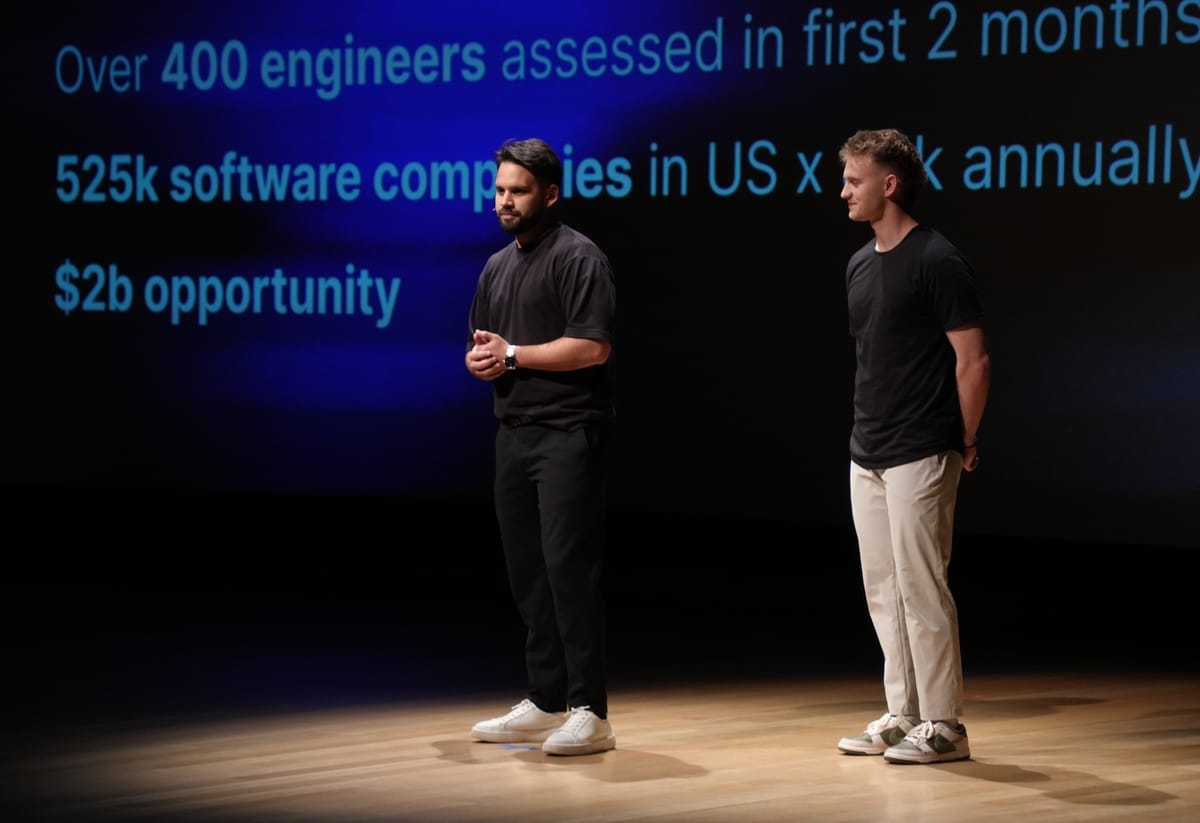
    Giovanni Galbuchi and Kaden Birch, Prova Co-Founders at UVU Demo Day, April 23, 2025

    The traditional technical interview process is outdated, inefficient, and, according to the founders of Prova, no longer fit for purpose. Engineers Kaden Birch, Giovanni Galbuchi, and Leandro Cabranes launched the startup in January 2025 to bring clarity, fairness, and relevance back to technical hiring—with the help of AI.

    “It’s an AI partner for technical interviews,” said Galbuchi, positioning Prova as a tool that augments rather than replaces the human elements of hiring.

    A Broken System, Worsened by AI

    Galbuchi, a senior software engineer, had long been frustrated by the disconnect between what interviews test and what engineers actually do. “As a candidate, it’s terrible. The tests usually measure the wrong things—algorithm puzzles that don’t reflect the real job,” he said. “And if you aren’t spending all day practicing these problems, it’s extremely hard to pass.”

    From the company side, the problem is equally serious. “It’s very hard to measure who the real talent is with the current tests,” he added. “You end up missing great candidates because the system is fundamentally flawed.”

    The rise of generative AI has only made things worse. “AI can solve these algorithm questions easily, so now candidates can cheat—and companies have no idea who actually has the skills they’re looking for,” said Galbuchi.

    Prova’s Solution: Real Skills, Real Assessment

    Prova flips the model. Companies select the skills and tech stack they care about, and candidates complete hands-on projects in their own environment. Once the project is submitted, Prova’s AI generates follow-up questions tailored to the candidate’s work.

    “This allows the candidate to explain the decisions they made during their project,” said Birch. “It shows how well they understood what they built, and it demonstrates their communication skills.”

    By combining project-based evaluation with AI-powered questioning, Prova helps hiring teams make informed decisions faster—while giving candidates a fairer shot at showcasing their real-world abilities. “We’re trying to narrow the growing gap between how engineers work and how they’re hired,” Galbuchi explained. “There’s no other tool that helps you measure how good an engineer is with AI.”

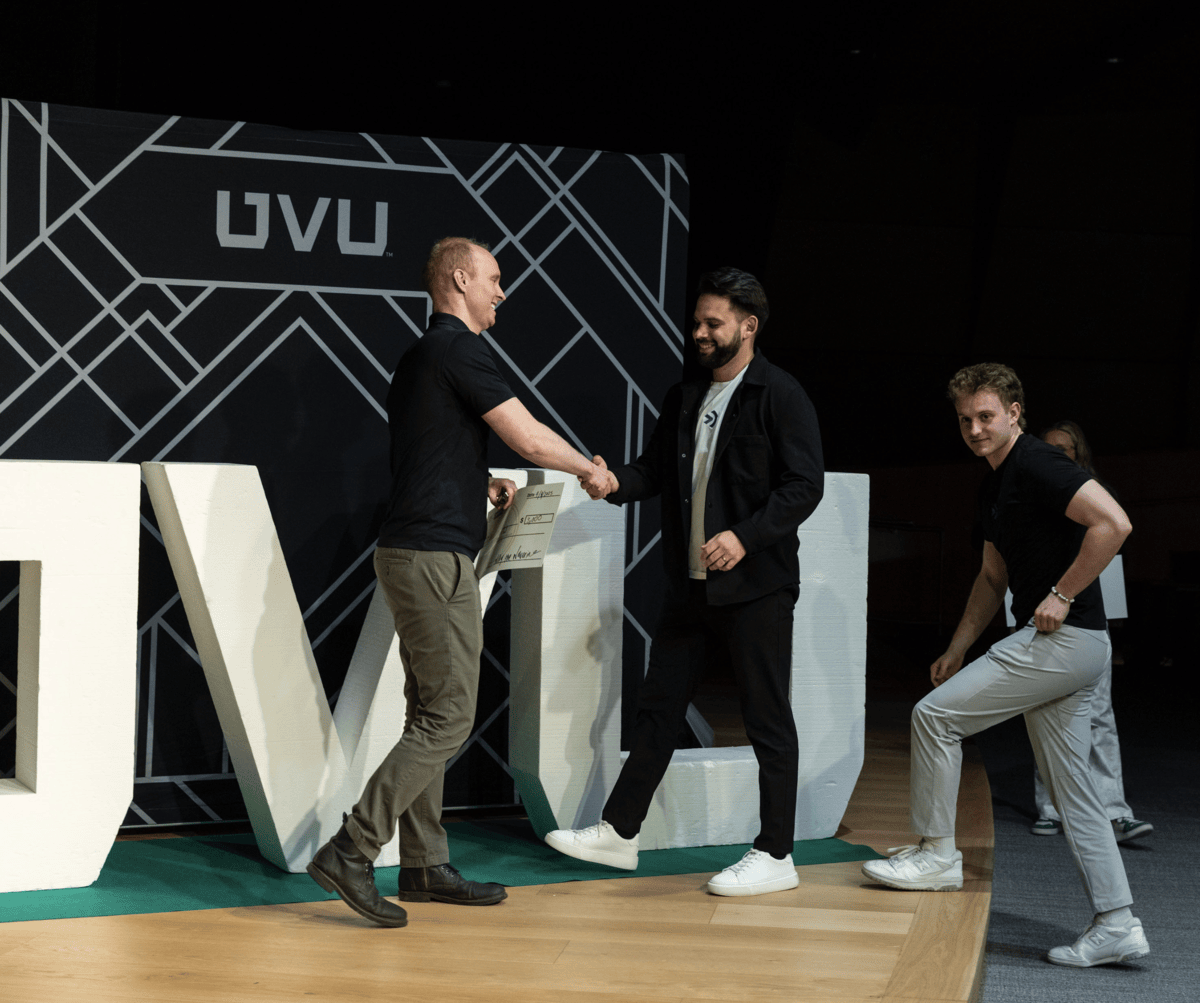
    Giovanni Galbuchi and Kaden Birch, Prova Co-Founders receiving a $3K award at Zinnstarter pitch competition at UVU, April 8, 2025

    Early Traction and Expansion

    Despite launching just a few months ago, Lehi, Utah-based Prova has already onboarded ten companies and assessed more than 400 engineers. The company recently helped Sandbox, a selective startup program for college students, screen applicants for its upcoming cohort—an especially meaningful partnership, since Prova itself emerged from the Sandbox program.

    The momentum is promising. “Our product is working at full capacity and we’re continuing to grow quickly,” said Galbuchi. Birch added that feedback from candidates has been overwhelmingly positive. One user told them, “Prova is a pretty awesome tool, considering how ineffective technical interviews have become.”

    Founders with a Track Record

    Before launching Prova, the team built and sold Senda, a tool for managing relationships in door-to-door sales teams. They walked away from that business—with $75K in potential recurring revenue on the table—when the idea for Prova took hold. “I felt strongly we had to pursue it,” said Galbuchi.

    What’s Next for Prova

    Prova’s revenue model is currently focused on B2B partnerships, but the team has plans to introduce additional streams in the future. In the meantime, they’re gearing up for a high-profile hackathon on May 17 in Draper, Utah, with $5,000 in cash prizes and sponsorship from companies like Redo, Remi, Jump – Advisor AI and Buster.

    “We want to know who the most cracked engineers are in Utah!” said Galbuchi.

    The team recently held their official demo day on April 23, 2025 and is now raising a pre-seed funding round. Prova remains entirely bootstrapped to date.

    “If you’re hiring software developers, scaling your engineering team, or leading a tech org, you can start using Prova right now,” said Birch.

    For early customers, Prova is offering a beta promotion. Interested investors and partners can reach Birch and Galbuchi via LinkedIn or email at [email protected] or [email protected].

    Find the original TechBuzz post here: https://www.techbuzznews.com/prova-is-reinventing-technical-hiring-before-ai-breaks-it-completely/